Trex Deck Build in Progress - Decking Boards Down, Stairs Up Next
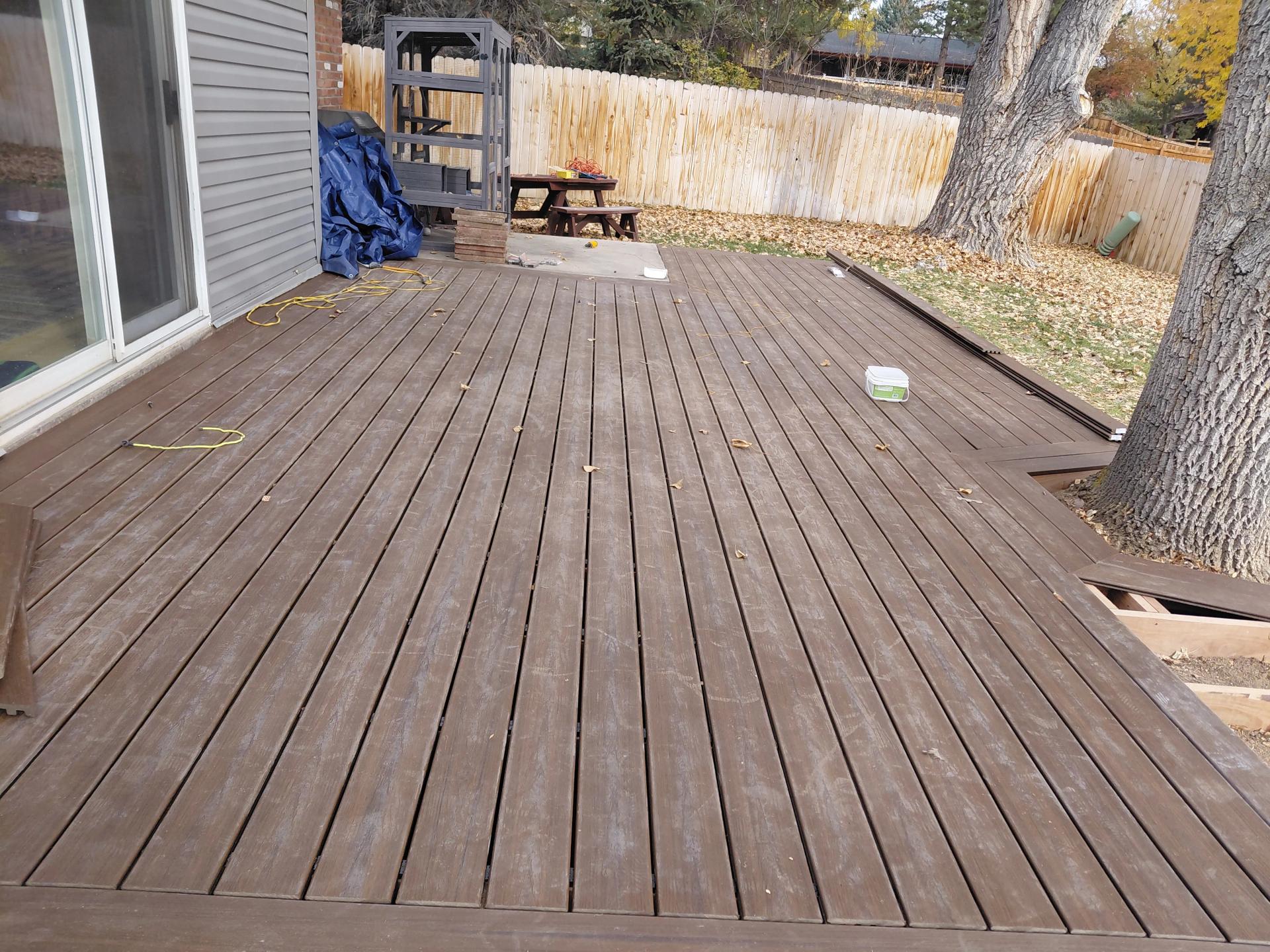
We're in the middle of a Trex composite deck build and the decking boards are fully laid out - clean, consistent spacing from edge to edge. Next up is stairs and trim work, and then this backyard is going to be a completely different space.
Here's what we love about Trex. Once it's down, it's down. No annual staining, no splinters, no boards warping and cupping after a few seasons. Homeowners who make the switch from pressure-treated wood almost never go back. The material holds up, looks good, and doesn't demand much from you after installation.
That said, the material is only as good as the build behind it. Getting the boards laid out with tight, uniform spacing takes patience. So does making sure everything is square and level before a single piece of trim goes on. That's the work that doesn't always show up in a finished photo, but it's the stuff that matters most.
Whether you're replacing a rotting wood deck or starting from scratch, composite decking is worth a serious look. The upfront cost is higher than pressure-treated, but most homeowners find it pays for itself when you factor in what you're not spending on maintenance year after year. It's a smarter long-term investment for most backyards.